
When designing a mechanical seal, the choice of material for the seal rings is one of the most technically significant decisions. Among the available materials, tungsten carbide stands out for a combination of properties that make it particularly well-suited for harsh operating conditions.
Understanding why this material is chosen is not just a theoretical matter: it means being able to recognize the conditions under which other materials fail while tungsten carbide continues to perform.
In this article, we at Fugesco will examine the characteristics, technical properties, and typical applications of tungsten carbide seal rings, with a focus on the hydroelectric sector, where we have been operating for years.
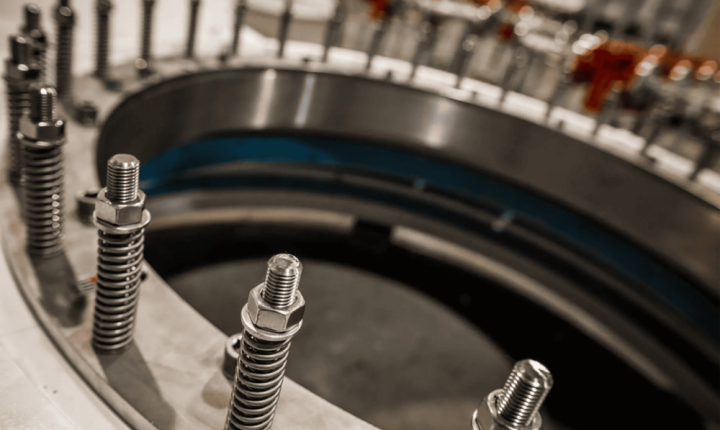
Seal rings are key components of mechanical seals: they create the friction pair that prevents fluid from leaking along the rotating shaft. They operate in mutual contact, one stationary and one rotating, separated by an extremely thin film of fluid that reduces wear and dissipates the heat generated by friction.
Tungsten carbide is a composite material produced by sintering tungsten carbide (WC) particles within a metallic matrix, typically cobalt or nickel. The result is an extremely hard and dense material with superior mechanical properties compared to most ceramic or metallic alternatives commonly used in this type of application.
Tungsten carbide owes its widespread use in mechanical seals to a combination of properties that make it reliable even under the most demanding operating conditions.
The first is its extremely high wear resistance. With a hardness ranging from 1,400 to 2,000 HV, tungsten carbide withstands prolonged contact with fluids containing particulates (sand, silt, oxides) without significant degradation. Under these conditions, wear is concentrated on the carbon counterface, preserving the ring’s integrity over time.
In addition, it offers superior mechanical strength compared to ceramic alternatives such as silicon carbide. The material withstands vibrations, misalignments, and cavitation without chipping or breaking, making it suitable for large pumps and systems subject to dynamic stresses.
Equally important is its performance during operation: tungsten carbide functions properly even under less-than-ideal lubrication conditions, withstanding frequent starts and brief periods of near-dry running with a low risk of seizure. This is a valuable feature in systems where operating conditions are not always controllable.
Finally, the material’s high thermal conductivity ensures effective dissipation of the heat generated by friction, contributing to the stability of the liquid film between the surfaces and extending the seal’s service life.
Tungsten carbide is not a one-size-fits-all solution, but it stands out as the preferred choice in all situations where operating conditions preclude the use of more brittle materials or those less resistant to wear.
The most common scenario involves contaminated fluids: untreated water containing sand, silt, or metal oxides is among the most challenging environments for any mechanical seal. Under these conditions, materials such as silicon carbide tend to deteriorate more quickly, while tungsten carbide maintains its performance over time thanks to its high surface hardness.
A second area of application involves machines with long shafts, where vibrations are structurally unavoidable. The mechanical strength of tungsten carbide allows it to absorb these stresses without compromising the seal, even when there is misalignment between the parts.
The material is also particularly well-suited for systems that undergo frequent starts and stops. Each start-up cycle exposes the seal to a brief period of operation with insufficient lubrication: tungsten carbide withstands these conditions better than other materials, reducing the risk of premature failure.
For these reasons, the most common applications include raw water pumps, water treatment plants, and, in particular, hydroelectric power plants, where all of these critical conditions tend to occur simultaneously.
The conditions described in the preceding paragraphs, water containing particulates, long runners, frequent starts, and high pressures, are not extreme scenarios; they are the standard operating conditions for a hydroelectric plant. It is precisely in this context that we at Fugesco, with over 60 years of experience in the industry, design and manufacture mechanical seals for turbines and large pumps.
Our solutions cover both radial and axial configurations, both of which are custom-designed to fit existing systems. In both cases, tungsten carbide seal rings play a central role: they ensure a tight seal under the most demanding operating conditions, withstanding particle wear, mechanical stress, and the frequent start-ups typical of hydroelectric power plants.
Does your plant operate under challenging conditions, and are you looking for the best solution? Contact us: we design mechanical seals for shafts up to 4 meters in diameter, tailored to your plant’s specific needs.

News


A member of:

Fugesco copyright © 2026 All Rights Reserved
Design by: Co.Mo.Do. Comunicare Moltiplica Doveri
Development by: Nur Digital Marketing